What Live Telemetry Actually Tells You
The Excell dashboard streams 14 channels at 100Hz. Here's what each one means and which three to watch when you're chasing more power.
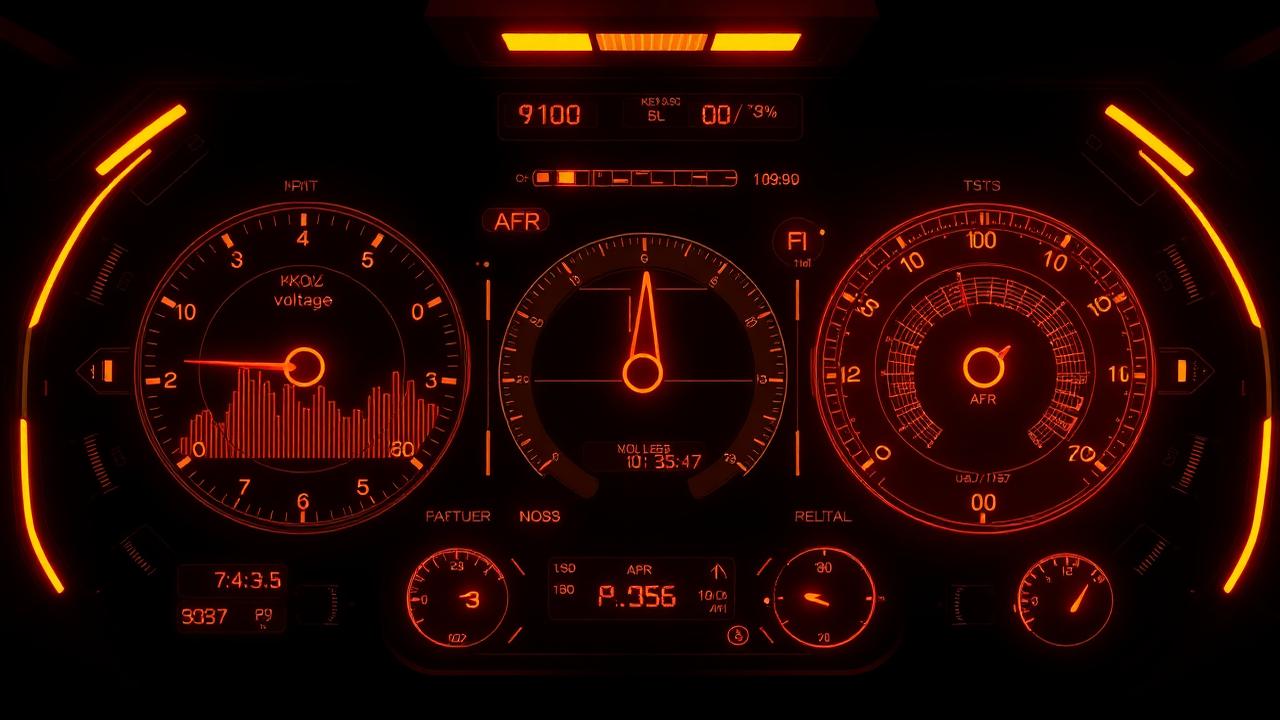
Most modern cars hide their internal state behind a CEL and a hope. Excell exposes 14 live data channels — pulled directly from CAN bus and supplemented by the flex-fuel sensor — at 100Hz refresh. It's the difference between driving and instrumenting.
The Three Channels That Matter Most
1. Knock Voltage
Your engine has piezoelectric microphones bolted to the block. They listen for the sharp, high-frequency vibration signature of detonation. Excell graphs the raw knock voltage in real-time. If you ever see sustained spikes above 0.4V, your ignition timing is too aggressive for your fuel quality.
2. Long-Term Fuel Trim (LTFT)
LTFT is your ECU's record of how much it's had to correct fuel delivery to hit the commanded AFR. Healthy stock: ±5%. Healthy on E85 with Excell: also ±5%. If LTFT drifts to +15% or higher, you've got a fuel delivery limitation — usually a tired pump or clogged filter.
3. Boost Pressure vs. Target
On forced induction cars, the gap between commanded boost and actual boost is the truest single indicator of how the system is working. Excell overlays both lines on one chart so you can spot turbo speed-up issues, wastegate creep, or boost leaks in seconds.
The Rest
- Wideband AFR (target + actual)
- Ethanol % (live from flex sensor)
- Fuel pressure (rail and pre-rail)
- Intake air temperature
- Coolant temperature
- Manifold absolute pressure
- RPM and gear
- Ignition timing (final commanded)
- Injector duty cycle
- Throttle position
- Fuel pump duty cycle
Logging and Export
Every drive is auto-logged at 100Hz to your phone, then synced to your private dashboard. Export to CSV for spreadsheet analysis or share a session link with your tuner. Nothing leaves your device unless you choose to share it.